Same Block, Double the Tax Bill: The PILOT Math Behind Jersey City Condo Prices in 2026
September 10, 2026
September 10, 2026
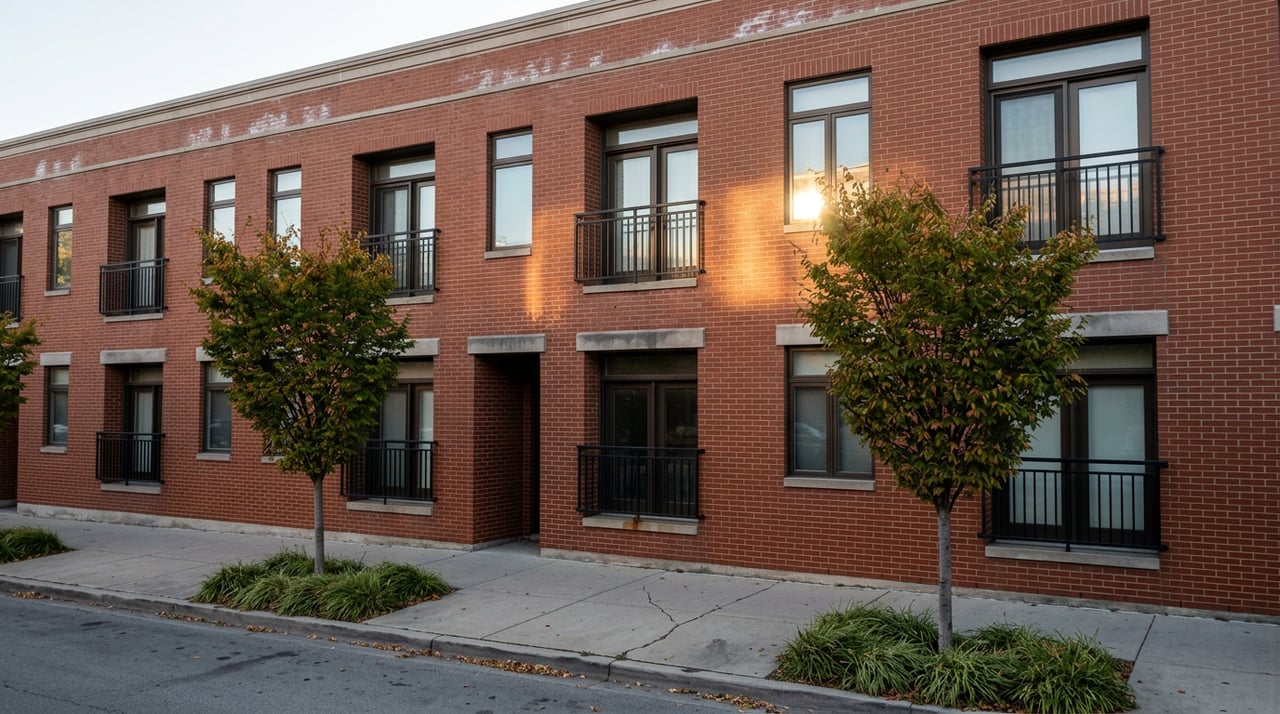
Walk down Washington Street in Paulus Hook and you'll pass two towers close enough to share a shadow. Same era of construction, same glass-and-brick vintage, same two-bedroom floor plan on paper. One owner's monthly tax line runs a few hundred dollars. The other owner, in the building next door, pays roughly double for the same square footage. Nothing about the units changed. What changed is the calendar.
That gap is not a pricing error, and it is not really about the towers at all. It is what happens when a Payment in Lieu of Taxes agreement, the tool that built much of Downtown Jersey City's skyline, reaches its expiration date. The buyer who treats the tax figure on a listing sheet as a stable number is pricing the wrong thing. In 2026, that mistake got a lot more expensive to make.
Most Jersey City condo listings quote a monthly tax figure the way they'd quote HOA dues, as if it were fixed. For a large share of Downtown and Paulus Hook inventory, it isn't. New construction there was largely built under one of two instruments: a five-year tax exemption, which phases in full conventional taxes on the value of the improvements over five years, or a long-term PILOT, which can run anywhere from ten to thirty years and replaces conventional property tax entirely with a negotiated payment tied to the building's revenue.
The distinction matters because of how the money gets split. Under New Jersey's Long-Term Tax Exemption Law, 95 percent of long-term PILOT revenue goes to the municipality and 5 percent to the county. The Board of Education receives nothing directly. Under conventional taxation, schools typically take the largest single share of the bill. That means a PILOT unit isn't paying a discounted version of the full tax bill. It's paying a bill that structurally excludes the school portion, and that portion arrives all at once, for the first time, the year the agreement ends.
That's the cliff. And a buyer comparing the monthly tax figure on an abated Downtown unit to a conventionally taxed unit in the Heights isn't comparing two prices. They're comparing a price to a countdown.
Two things happened in Jersey City in 2026 that widened the gap between what an abated unit pays now and what it will owe later, and neither has fully worked its way into how listings are priced.
The first is the audit. On January 21, 2026, Mayor James Solomon signed an executive order launching a review of every long-term tax exemption active in the city, a group that Genova Burns' real estate practice reported numbers over 100 agreements. The stated goal is compliance, not punishment, but the mechanics matter to a buyer regardless of intent: if a building's financial agreement is found out of compliance, the city can seek enforcement, amendment, or in some cases termination of the deal. That risk now sits on every abated unit until its building clears the review.
The second is the budget. Jersey City opened 2026 facing a structural deficit that the Solomon administration pegged at roughly $90 million against a reported $255 million inherited shortfall. After the City Council rejected an initial 20 percent hike in early July, the administration introduced a revised budget on July 15, 2026 raising the municipal tax rate by about 15.5 percent, with county and school levies each climbing separately by roughly 14 percent the same year. That increase hits conventionally taxed properties immediately. It hits an abated property the moment its PILOT expires, which is exactly when the school portion also lands for the first time. The two increases stack.
Layer onto that a third fact tracked by the policy research group Better Blocks NJ: 32 long-term PILOT agreements are set to expire over the next four years of the Solomon administration. Those 32 agreements currently generate about $40.9 million a year in PILOT revenue combined. Under conventional taxation, the same properties are estimated to generate closer to $75 million. A buyer closing on a unit inside one of those buildings today, on a typical mortgage term, will very likely still own it when that gap closes.
Here's the part that runs against the instinct most buyers bring into a Jersey City search. Jersey City's standard effective tax rate is genuinely one of the lower ones in the region.
| Municipality | Approximate effective tax rate |
|---|---|
| Jersey City | 1.67% |
| Newark | 2.8% |
| Montclair | 3.2% |
| Maplewood | 3.4% |
A conventionally taxed two-family in the Heights, where abatements are largely absent, is often a more predictable holding than a Downtown condo whose current tax line looks artificially low. The low PILOT payment isn't evidence of a cheap tax town. It's evidence of a payment schedule with an expiration date, and the schedule is the thing that needs pricing, not the sticker.
Downtown and Paulus Hook towers on long-term PILOTs. These remain some of the best-marketed inventory in Hudson County, and a payment schedule that holds for another decade or two can be a genuine advantage during the hold. The point isn't to avoid this product. It's to ask how many years are left on the specific agreement, not the building's age, and to model the fully taxed payment the unit will owe once it sunsets rather than trusting a projection built on last year's rate.
Small multifamily and condo conversions on five-year exemptions. These are shorter and more common for individual owners and renovations. The distortion is largest here, because a unit two years from the end of its exemption is close enough to the cliff that the price should already reflect the rollover. If it doesn't, that's negotiating room.
The Heights and other non-abated stock. No PILOT complexity, no expiration to model, just the standard 1.67 percent rate applied consistently. For a buyer who wants a tax bill that doesn't change shape in year six or year fifteen, this submarket removes the variable entirely.
Does a shorter remaining PILOT term always mean a worse buy? Not necessarily. It means the resale audience narrows to buyers who can absorb the post-expiration payment, and the price should already reflect that. A unit with two years left on a five-year exemption can be a strong buy if it's priced for the rollover rather than for its current discounted bill.
Will the audit lead to retroactive bills for individual condo owners? The audit is aimed at developer and owner compliance with the terms of the financial agreement at the sponsor entity level. Long-term PILOTs generally sit with the sponsor, not the individual unit owner, though in some building structures that exposure can filter down through common charges, which is exactly why it's worth asking your attorney and condo board directly rather than assuming either way.
Jersey City's tax structure rewards buyers who read the fine print and penalizes the ones who anchor on the number a listing puts in bold. If you're comparing a Paulus Hook tower to a Heights two-family, or trying to figure out what a five-year exemption actually costs you in year six, that's exactly the kind of math worth walking through with someone who does this for a living.
Cesar Rosado has spent more than two decades working New Jersey transactions from the buyer's side, the landlord's side, and the investor's side, which means the tax line on a listing gets read the way it should be, as a schedule, not a sticker. If you're weighing a PILOT unit against conventional stock anywhere in Jersey City or Hudson County, Let's Connect before you write the offer, not after.

Real estate decisions deserve thoughtful guidance and expert execution. Cesar combines local market knowledge, personalized service, and strong negotiation skills to help clients achieve exceptional outcomes. Your goals become the foundation of every strategy.

Cesar Rosado
160 S Livingston Ave Livingston, NJ 07039